

Soil Requirements for Sunflower Production
Sunflower is one of the most important oil crops in the world and in our country, and in Turkey the plant is mostly used for oil production. In recent years, world sunflower production has been around approximately 23 million tons, and Turkey is among the top ten countries both in terms of production and cultivation area. While oil sunflower production in our country is largely concentrated in the Thrace-Marmara Region, confectionary sunflower is mostly grown in the Central and Eastern Anatolia Regions, and to a lesser extent in other regions.
Depending on climatic conditions and applied price policies, oil sunflower cultivation areas in our country have varied between 500–600 thousand hectares in recent years, while production has fluctuated within the range of 600–850 thousand tons. Due to being highly suitable for mechanization and not demanding excessive labor, sunflower cultivation areas are increasing every year in many different regions. The genetic origin of sunflower is North America, and it can still be found growing in wild form in the central parts of the USA. Although it has economic importance, it is not known for certain where and when its farming first began. Before the first migrations to the New World, it was used by North American Indians as a raw material for dyes. Sunflower seeds brought from North America by Spanish explorers in the 1850s were first grown as an ornamental plant in gardens in Spain. Sunflower was first evaluated as an oil crop in Russia, and from there it spread throughout Europe. After World War II, between the years 1945–1950, sunflower entered Turkey through seeds brought by citizens migrating from Bulgaria. The major increase in production and cultivated areas, however, occurred after the 1980s with the spread of hybrid varieties across our country. Varieties developed by sunflower breeders around the world, possessing high oil content and strong seed yield, have greatly increased production, and the hybrid sunflower varieties developed over the last 20 years have played a major role in reaching the desired production level.

CLIMATE REQUIREMENTS
Sunflower is an annual plant grown in continental climate zones and in rainy areas of temperate climates. It has a very wide adaptation ability. During its 120–130 day vegetation period, its total heat requirement is around 2600–2850oC. For seed germination, soil temperature must be at least +4oC. For regular and healthy germination, soil temperature should be at a minimum of 10–12oC.
Sunflower is relatively resistant to cold during the seedling stage. In the cotyledon phase, it can withstand temperatures down to -5oC without serious damage. However, this resistance gradually decreases toward the 6–8 leaf stage. In later growth stages, exposure to 0oC may begin to cause plant injury.
The optimum night temperature for growth and development is 18–20oC, while the ideal daytime temperature is around 24–26oC. At temperatures above 36–40oC, pollen germination is negatively affected, putting cross-pollination at risk.
While sunflower is not extremely drought tolerant, it can still be grown with a certain degree of success under dry conditions where many other cultivated crops cannot thrive. Its ability to extend roots up to 2 meters deep allows it to efficiently absorb and utilize existing soil water, making it more tolerant to short-term drought periods.
Sunflower requires total seasonal rainfall of approximately 500–600 mm. It is essential for this rainfall to be evenly distributed across the growing season. About 20% of total annual water consumption occurs from emergence until the beginning of head formation.
The plant’s highest water demand occurs in the 40-day period before and after flowering, during which nearly 60% of total annual water consumption takes place. Water stress during flowering leads to irreversible yield losses. Sunflower does not favor highly humid regions; elevated relative humidity increases the negative impact of diseases that cause head rot.
SOIL REQUIREMENTS
Sunflower is not highly selective in terms of soil type. It can be grown successfully in many different soil structures ranging from sandy to clayey soils. However, deep-profile, alluvial soils rich in organic matter are particularly suitable for sunflower farming. It does not favor stony, excessively sandy, or shallow soils. The desired soil pH range is between 6.0 and 7.2. Fields intended for sunflower farming should not have high groundwater levels and must be free of drainage issues. Sunflower has low salt tolerance and can withstand salinity up to 2–4 mmhos/cm.
PLANTING AND SEED SELECTION
After preparing an appropriate seedbed, sunflower planting is carried out using pneumatic seed drills that release seeds individually. Research shows that deep plowing with a moldboard plow in autumn followed by seedbed preparation using a cultivator and harrow in spring is one of the most economical soil tillage methods. For weed control, herbicides containing trifluralin are commonly applied before planting and mixed thoroughly into the soil using secondary tillage tools, such as a harrow. To ensure uniform soil distribution of the herbicide, planting should occur 2 days after the initial application. Plants reaching a height of 25–30 cm also require inter-row tilling using mechanical cultivators, followed by removal of in-row weeds by hand hoeing. Common weed species problematic for sunflower include cocklebur, bindweed, mustard, and crabgrass.
Farmers must consider several criteria when selecting hybrids. First, seed price and yield potential should be evaluated. Regional trial results from agricultural institutes, province and district agricultural offices, and private companies provide valuable insight for hybrid selection. Early-maturing varieties are often preferred due to fast crop rotation schedules that involve immediate wheat planting after harvest. Uniformity and cleanliness of hybrid seeds are essential to reduce production risk. Hybrid seeds significantly outperform open-pollinated varieties in yield and plant uniformity. Treated with Metalaxyl, hybrid seeds present strong resistance to downy mildew and help maintain improved plant development and yield stability.
In Turkey, hybrid seeds are classified from 1 to 5 based on seed size (1 being the largest and 5 being the smallest), although seed classification standards vary among companies. Mid-sized seeds are more cost-effective due to lower seeding rates per hectare. Sunflower is nutrient-intensive; therefore, sequential cropping of sunflower on the same field should be avoided. Recommended crop rotation systems include wheat-sunflower under dry conditions and sugar beet, feed crops, or maize-sunflower under irrigated conditions. Planting dates typically range from early April to mid-May, with harvesting occurring from late August to September, following an average 120–130 day growth cycle.
SUNFLOWER IRRIGATION WATER REQUIREMENT AND IRRIGATION TIMING
According to the data in Table 1, sunflower water consumption in Turkey follows 615 mm annual irrigation water requirement.
|
MONTHS |
PLANT WATER CONSUMPTION (mm) |
AVERAGE RAINFALL (mm) |
IRRIGATION WATER REQUIREMENT (mm) |
|
APRIL |
15.0 |
42.4 |
- |
|
MAY |
57.5 |
42.7 |
14.8 |
|
JUNE |
175.2 |
31.2 |
144.0 |
|
JULY |
217.8 |
10.5 |
207.3 |
|
AUGUST |
149.9 |
9.1 |
140.8 |
|
TOTAL |
615.4 |
135.9 |
506.9 |
EFFECTIVE ROOT DEPTH OF SUNFLOWER
For irrigation planning, it is essential to maintain continuous and sufficient soil moisture in the root zone without causing water stress to the plant. The allowable water consumption at 60 cm soil depth can be considered as 45–55 mm for medium and heavy soils, and 30–35 mm for light-textured soils.
IRRIGATION TIMING SCHEDULE
In the conditions of Central Anatolia, irrigation intervals and number of irrigations applied in medium–heavy textured and light-textured soils where sunflower is grown are summarized in Table 2.
|
MONTHS |
MEDIUM AND HEAVY TEXTURED SOILS WITH LOW WATER INTAKE RATE |
LIGHT-TEXTURED SOILS WITH HIGH WATER INTAKE RATE |
||
|
IRRIGATION INTERVAL (days) |
NUMBER OF IRRIGATIONS |
|
|
|
|
APRIL |
- |
1 |
- |
1 |
|
MAY |
- |
- |
- |
- |
|
JUNE |
(10-12) |
(2-3) |
|
|
|
JULY |
(8-10) |
(3-4) |
|
|
|
AUGUST |
(8-10) |
(2-3) |
|
|
|
TOTAL |
|
(8-10) |
|
(11-15) |
WATER RETENTION
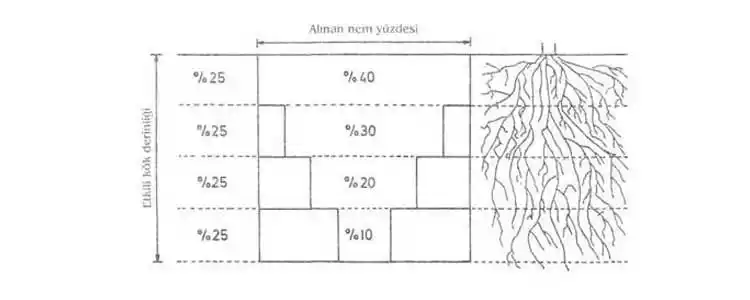
NOTE: The effective root depth of sunflower is 90-120 cm and the majority of capillary roots are concentrated between 0-60 cm depth. Therefore, in drip irrigation programs the effective root depth is recommended to be considered as 60 cm and irrigation should begin when approximately 50% of the field capacity water has been consumed.
SUNFLOWER’S MOST WATER-SENSITIVE GROWTH STAGE
The period between the beginning of head formation before flowering and the milk-maturity stage is the most water-sensitive phase. Water stress occurring in this stage causes irreversible yield losses.
Sunflower’s highest water demand occurs during the flowering stage. In this phase, irrigation should be completed in a timely manner without putting the plant under stress, and delays must be avoided.
DISEASES AND PESTS
One of the most important pests of sunflower in our country is the parasitic plant called broomrape (orobanche). There are hybrid varieties on the market that are tolerant to this parasite. Besides this, other fungal diseases that may cause issues in certain regions or years include sunflower downy mildew, stem rot, root rot, and head rot. In rainy summer seasons, head rots caused by Rhizopus and Botrytis species may increase in severity. Sunflower downy mildew seeds are treated with Metalaxyl and this provides high-level control against the disease.
BROOMRAPE (OROBANCHE)
However, there are currently no varieties that are resistant to Sclerotinia root and stem rot, especially seen in irrigated fields, and there is no chemical control method that effectively manages this disease yet.
At present, there are no major insect sunflower pests in our country that exceed the economic damage threshold.
ALTERNARIA
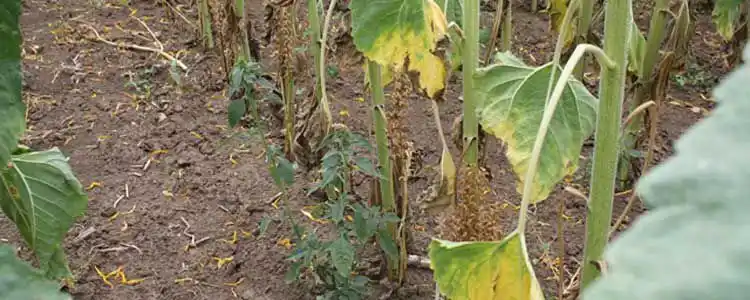
Alternaria species may cause rotting and collapse during the seedling stage. Dry lesions and velvety mold layers appear on green parts of the plant (stem, leaves, and head). Flower sections may also become infected. The fungus can spread to the seed, leading to contaminated seeds that reduce both quality and yield. It is commonly observed in plants that have been weakened by stress or other external factors.
PHOMA SPP.
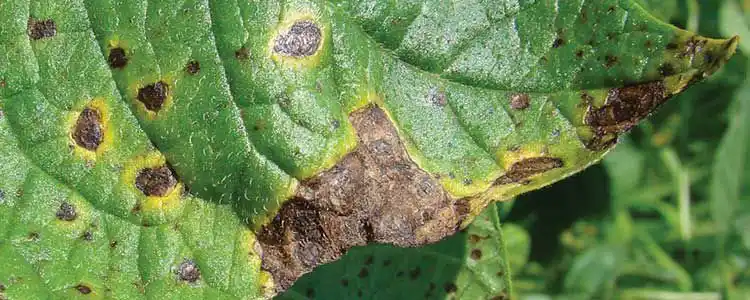
Phoma species are seen on above-ground organs, especially at the base of leaf stalks, as brown-black spots. Inside the stem, tissue turns brown, dries, and becomes fragile, increasing the likelihood of lodging and stem breakage. The most suitable temperature range for fungal growth is around 25°C. This disease currently has no significant economic impact in Turkey.
CULTURAL WEED CONTROL
- Only clean, certified seeds that do not carry weed seeds should be used during planting. Crop rotation should be applied whenever possible. Weeds that reproduce through rhizomes, such as quackgrass, must not be allowed to spread from one field to another through soil-tillage equipment.
- Weed control must also be applied along field boundaries and buffer strips.
MECHANICAL WEED CONTROL
- Tilling the inter-row space when plants reach 25–30 cm in height, using mechanical hoes such as cultivators, is essential for both weed control and reducing water loss by breaking capillary evaporation tubes.
- Whenever sufficient manpower is available, hand-hoeing must be applied after mechanical tilling to remove inter-row weeds.
CHEMICAL WEED CONTROL
- Chemical weed control using herbicides is the most economical approach. The herbicide type should be selected according to weed species and may be applied either before, immediately after planting, or after crop emergence.
- Pre-planting herbicides must be incorporated into the soil at a 10–12 cm depth using mechanical tillage tools such as cultivators.
- Pre-emergence herbicides are sprayed directly on the soil surface without incorporation.
- Post-emergence herbicides should be applied during the 2–4 leaf stage of weeds to maximize effectiveness. Late application may harm the crop or result in insufficient weed control.
PRINCIPLES FOR SUCCESSFUL IRRIGATION IN SUNFLOWER FARMING
- Irrigated fields must be deeply tilled in autumn using moldboard plows or similar tools.
- Ensure that sunflower is irrigated according to a schedule that prevents water stress at all growth stages. Maintain beneficial soil-water capacity and begin irrigation whenever 50% of available capacity has been consumed.
- Plant rows and irrigation furrows must align perpendicular to field slopes to reduce erosion and enable better soil-water retention.
- Furrows should be created between rows using cultivators whenever plants reach 25–30 cm height before irrigation begins.
- Check that irrigation water reaches root zones using iron rods or similar tools.
- Ensure that irrigation water is evenly, uniformly distributed across the field and sunflower’s root zones.
ADVANTAGES OF DRIP IRRIGATION
- Drip irrigation can efficiently irrigate uneven, sloped fields, reducing erosion risk.
- It ensures high-efficiency irrigation without incurring water loss in sandy, high-permeability soils.
- It can manage irrigation without raising groundwater levels.
- It provides efficient fertilizer use by irrigating only root zones.
- It allows frequent, low-dose fertilizing that improves plant health.
- It begins irrigation whenever 50% of field capacity water has been consumed.
- Hybrid seeds treated with Metalaxyl provide strong disease resistance.
- It prevents deep washing of fertilizer in high-pH soils.
FILTERS IN DRIP IRRIGATION
- Check filter cleanliness before starting pump systems.
- Clean filters whenever pressure difference reaches 1 bar.
DRIP IRRIGATION PIPE CLEANING
Clean drip irrigation pipes flush sediment 3–4 times per season.
FERTILIZER USAGE GUIDE
Recommended fertilizers must fully dissolve in water.
RODENT PROTECTION
Store pipes in rodent-controlled areas after harvesting.
MECH BURN
Use black mulch or bury drip pipes to avoid lens-effect heat burns.
HARVESTING AND STORAGE
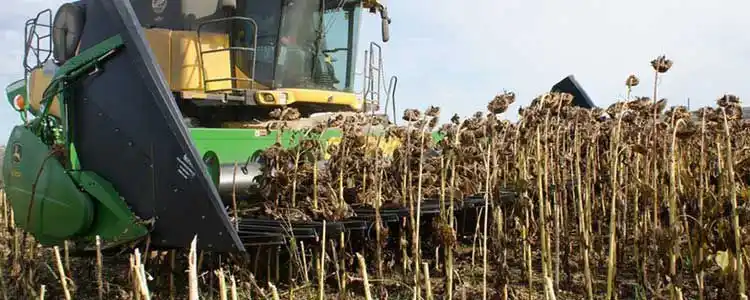
- Seed moisture must be under 10% at harvest to ensure safe storage.
- Ventilate storage areas when moisture exceeds 11–12% to prevent heating.
Start irrigation whenever 50% of available water is consumed.
Drip irrigation protects plant canopy dryness, preventing pest pesticide wash-off.
BIBLIOGRAPHY
Prof. Dr. Halis ARIOĞLU