Alfalfa Production
Thanks to its high feeding value and wide adaptation ability, alfalfa is a strategic agricultural crop that ranks among the top forage plants preferred globally. Although it has traditionally been used in the form of dried hay, its evaluation and utilization as silage are also becoming increasingly widespread and gaining importance.
Alfalfa is a perennial forage plant that can balance water needs using its deep root system, resist harsh climate conditions, and adapt quickly to diversified environmental settings. Its strong structure offers tolerance to both hot and low temperature waves. It can grow healthily in many soil types except for naturally acidic soils. In addition to many vitamins in its composition, it also contains essential minerals that support plant development and animal nutrition.
In agriculture, alfalfa is used not only as a forage source but also as a biological soil improvement element that strengthens the physical and chemical structure of the soil. Its roots, which can reach depths of 2–3 meters, effectively transfer water and nutrients from deeper soil layers, creating a natural nitrogen and organic content reservoir for shallow-rooted crops to be grown in the following season. Thus, it leaves a more productive cultivation environment for the crops planted afterward.
SOIL PREPARATION
It is highly important that the field where alfalfa sowing will take place has a balanced drainage system that prevents water accumulation. A levelled and fine-graded surface is a defining factor for the long-term healthy development of the plant. If production is planned on areas with high slopes, the land must first be terraced and then levelled. Since alfalfa seedlings grow more slowly compared to many other plants, the field should be cleared of weeds before sowing, and soil compaction in deeper layers should be eliminated using subsoiler equipment. Because the seedbed requirement is small and sensitive, after plowing, the ideal seedbed should be prepared with a disk harrow or chisel plow. If the soil pH level is below 6.5, lime supplementation should be applied in suitable amounts according to the field.
|
pH |
Required Lime (kg/decare) |
|
4.8 |
1750 |
|
5.2 |
1500 |
|
5.5 |
1250 |
|
5.8 |
1000 |
|
6.1 |
750 |
|
6.4 |
500 |
|
6.5 |
0 |
SOWING
The most critical factors in sowing timing decisions are the soil temperature and the current moisture (tilth) level. Alfalfa is generally planted in two seasons: Autumn sowing is done at least 4 weeks before the first frost (September–October), and spring sowing is done after the last frost and at least 4 weeks before the end of rainfall. For fields up to 5 decares, broadcast sowing can be used, but for larger lands, seed drill use is recommended. In row sowing, 15–20 cm row spacing and 0.5–2 cm sowing depth are suitable. A seed rate of 2–2.5 kg per decare is considered ideal. After sowing, light pressing with a roller supports seed stabilization and strengthens emergence. Nutrient supplementation applications should be planned based on nitrogen and phosphorus requirements.
POST-SOWING PERIOD
Strengthening the soil with organic content provides a major advantage in sustaining long-term alfalfa yield. If access to natural fertilizer is limited, applying 28 kg of Triple Super Phosphate per decare during soil preparation and adding 12 kg of Ammonium Nitrate (26% N) during sowing are recommended. In the first year, green forage yield may be limited, but silage yield increases in the following years. Starting from the second year, adding 15 kg of DAP per decare between December and February provides an advantage. Additionally, applying 8–10 kg of Ammonium Nitrate per decare after each cutting and then irrigating supports productivity.
CARE AND IRRIGATION
Soil crusting that may form after sowing is one of the risk factors that directly affects sprouting and must be broken using a toothed light roller. Weed control in small areas can be done by hoeing, and in larger parcels, the first cut should be done early as a “cleaning cut” to reduce weed pressure. Irrigation may be planned in 2 rounds—7 days before and 7 days after each cutting.
HARVEST TIME
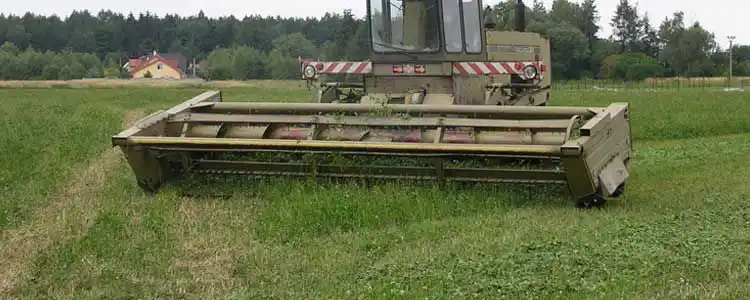
The period when alfalfa reaches maximum protein efficiency is the phenological stage when 10% of the field is in bloom. Harvesting at this stage offers maximum output in both quality and green forage quantity. Correct maintenance of stubble height is critical to avoid damage to subsequent growth. Depending on the region, 5–10 cm stubble height is suitable, but in the final harvest before winter, stubble must be left at 15 cm. Soil compaction caused by excessive field traffic, especially during wet conditions, may negatively affect soil aeration balance. Harvesting is recommended in the early morning or in evening coolness.
YIELD
The strongest hay production performance of alfalfa is generally observed in the third season. In the following seasons, yield varies depending on consistency in plowing, irrigation, and nutrient support applications. Under suitable irrigation conditions, annual dry hay yield may reach 1200–1800 kg per decare. Average green forage yield is 1 ton per decare, and its dry matter conversion is approximately 250 kg.