
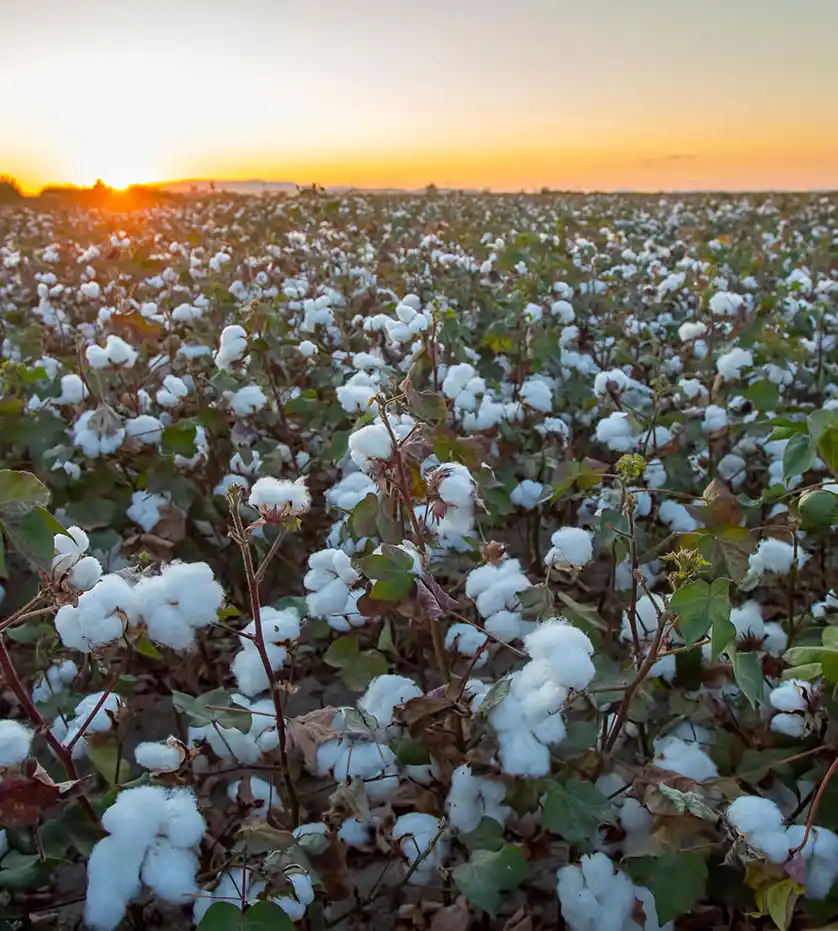
Efficient Cotton Production
SOIL REQUIREMENTS
Although cotton can adapt to many different soil types, deep and fertile alluvial soils are preferred to achieve high yield and strong fiber quality. Ideal soils for cotton farming are well-structured, deep sandy-loam or clay-loam with high water-holding capacity, balanced drainage, and easy tillage and irrigation conditions.
CLIMATE REQUIREMENTS
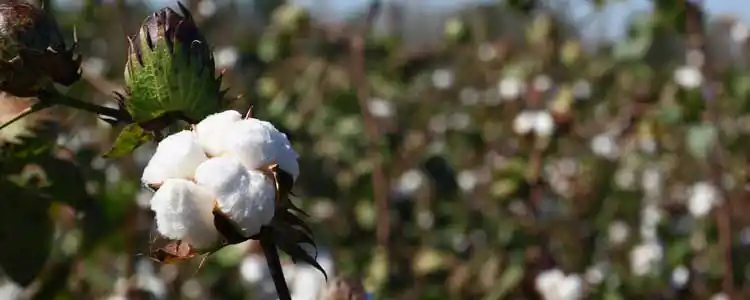
The most important climate factors in cotton cultivation are temperature, sunlight duration, rainfall, and relative humidity. The yearly average temperature is expected to be around 19ºC, while summer temperatures of approximately 25ºC are considered ideal. Temperature needs vary depending on the plant's growth stages:
- Before the formation of squares (flower buds): at least 20ºC
- During flowering: around 25ºC
- During boll development: between 30–32ºC
To ensure good boll opening during the harvest period, a gradual temperature decrease is desired, even down to 15ºC if possible.
SOIL PREPARATION
In preparing a field for cotton planting, the first step is land cleaning and deep soil cultivation. In fields where cotton has been grown continuously for many years, a compacted hard layer known as “plow pan” or “hardpan” can form over time. Since this layer restricts root penetration, it must be broken. For this purpose, subsoiler (deep ripper) equipment is used. This process can reach depths of nearly 90 cm without disturbing the topsoil excessively. After deep soil loosening, seedbed preparation is completed through autumn and winter plowing.
If cotton is to be planted again after cotton, the stalks should be shredded and cut in the fall, and the land should be plowed to a depth of 20–25 cm. If weed density is high and soil moisture is suitable, repeating plowing in winter will be beneficial. In crop rotation systems where cotton follows cereal crops, plowing should begin immediately after harvest while the soil is still moist. The last plowing in cotton farming is done in spring for seedbed preparation, and a depth of around 15 cm is generally sufficient.
PLANTING
Using genetically pure, vigorous, and high-quality seed is one of the key conditions for superior yield and long staple fiber production.
The main characteristics of a good cotton seed (fuzzy seed) are:
- The seeds should be large, plump, and uniform in shape and color. The amount of naked, green, dark, or weak-fibered seed in the batch should be minimal.
- Seeds should be well-selected and cleaned. Foreign materials such as empty or broken kernels and leaf debris should not be present.
- The seed should be dry, firm, and suitable for storage conditions.
- Germination capacity should be above 80%.
- It should be ginned in a Sawgin type ginning factory.
- Seed fuzz should be removed (delinted seed).
The planting schedule changes depending on the region’s weather conditions. Planting should begin when the soil temperature rises above 15ºC. Although this schedule may vary from season to season, the period between March 25 and April 30 is generally considered the most reliable planting window. Planting is commonly done using precision seed drills in rows. Standard spacing is 70 cm between rows and 35–40 cm within the row. Planting depth varies depending on soil texture, but 3–4 cm is usually sufficient. Under suitable conditions, seedlings emerge within 5–10 days.
IRRIGATION
The total water need of the cotton plant ranges from 400–600 mm depending on soil and climate conditions. Since annual rainfall is insufficient in most cotton-producing regions, the plant's water deficit should be supplied through additional irrigation. Irrigation timing and amount should be adjusted by observing plant water stress symptoms and field moisture levels. In our region, for medium-textured soils and regular seasonal conditions, 4–5 irrigation applications at 15–20 day intervals usually support healthy and profitable growth cycles. Especially in Çukurova-like conditions, the most common irrigation technique is surface irrigation (sprinkler method).
DISEASES AND PESTS
The most common diseases observed in cotton fields include:
- Cotton wilt disease
- Seedling root rot
- Angular leaf spot disease
- Anthracnose
The most widespread pests in cotton farming are:
- Soil worms
- Cotton aphid
- Leafhopper
- Whitefly
- Red spider mite
- Pink bollworm
- Green bollworm
- Cotton leafworm
- Spiny bollworm
- Striped leafworm
High temperature and relative humidity create a favorable environment for these pests and diseases to spread rapidly. Therefore, in regions like Çukurova, pesticide application 4–5 times during the growth period is often unavoidable.
FERTILIZATION
The fertilizer program to be applied in cotton cultivation should be specially planned according to climate, irrigation possibilities, soil structure, and the cotton variety being grown. It is essential to perform a soil test before determining both fertilizer type and dosage. A common fertilizer approach generally includes:
- Nitrogen fertilizers: 14–16 kg of pure nitrogen per decare
- Phosphate fertilizers: 4–6 kg of pure phosphorus per decare
- Potash fertilizers: Since most of our soils are naturally rich in potassium, potassium fertilization is usually unnecessary. However, this must be verified through soil analysis.
- Other nutrients and micronutrients should be determined by soil and plant analysis.
HARVESTING AND THRESHING
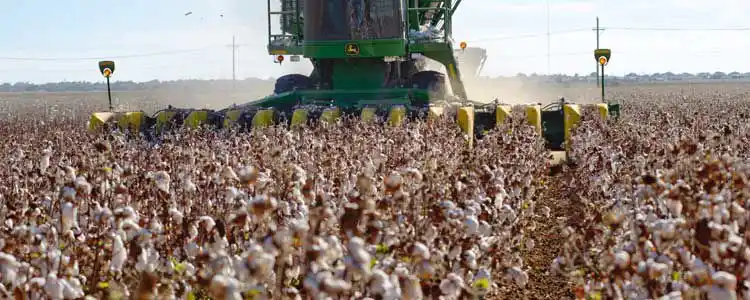
Cotton harvesting begins when the bolls reach full maturity. Harvest timing may shift depending on planting date, irrigation schedule, and climate characteristics. In our region, harvesting typically begins in late August and continues gradually until early November. Even though hand picking was applied 2–3 times in the past, rising labor costs and workforce shortages have made this method economically impractical. For this reason, machine harvesting has now become a natural production necessity. In recent years, numerous research and real-world applications on mechanical harvesting have been successfully carried out and increasingly adopted by cotton producers.
REFERENCES
Prof. Dr. Oktay GENCER